+86 15633683072
Walk into any pipe fabrication yard running a large-diameter spread and you’ll hear the same complaint from the floor: “We can’t find enough welders who can hold quality on 30-inch-plus girth welds, day after day.” That’s the reality behind the growing adoption of automated systems. A Magnatech orbital welding machine doesn’t replace the welder—it replaces the wrist fatigue, the variable travel speed, and the 3 p.m. quality drop that comes with welding a 3-meter circumference by hand.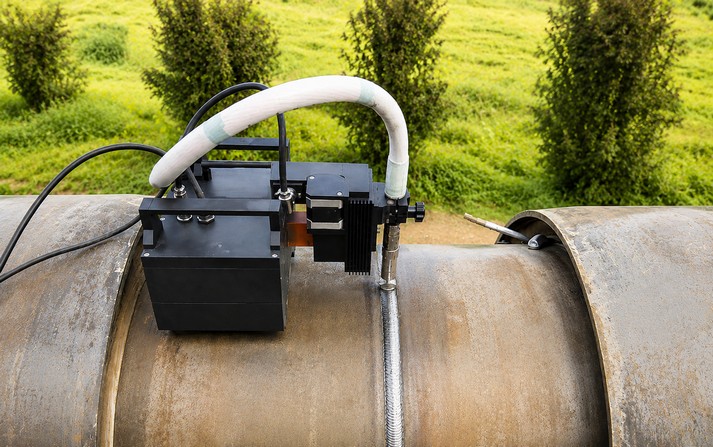
A 36-inch pipe with a 25 mm wall thickness requires multiple fill passes around more than 2.8 meters of circumference per joint. Every stop-and-start creates a potential void. Every operator change introduces a new travel speed. On projects where 100% radiographic inspection is required, the repair rate becomes the number that determines whether the spread stays on schedule.
At a Syncrude expansion in Alberta, a contractor faced exactly this scenario: limited access around the weld circumference made manual welding difficult on 3.25 m diameter pipes with 25 mm wall. They mounted a Magnatech Pipeliner with Flx-Track magnetic attachment directly onto the pipe OD. Over 110 linear meters of weld deposit, the repair rate came in at 0.086%—roughly 100 mm of repair on welds that all required 100% RT to ASME Section VIII. That number, not the marketing brochure, is why fabricators keep calling Magnatech orbital welding machine suppliers back.
For girth welding purposes, large-bore generally starts where a welder can no longer comfortably reach across the joint—often cited as 30 inches and above. But the useful threshold is lower. Magnatech’s Pipeliner II 609 handles 6-inch through 60-inch pipe with interchangeable guide rings, and larger sizes with custom rings. The D-Head 420 covers 1-inch to 14-inch for multipass GTAW. So the selection conversation isn’t binary; it’s about matching the weld head to the pipe range and process.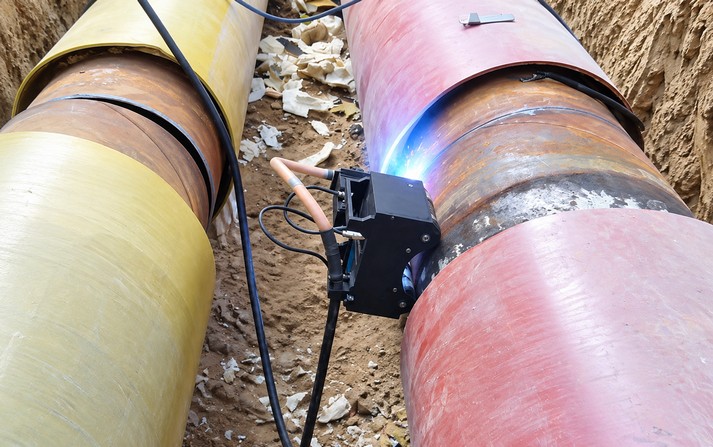
For large diameter pipe welding in the field, FCAW dominates fill passes. It deposits fast, tolerates fit-up variations better than solid wire, and the flux system handles mill scale and light contamination that would cause porosity in GMAW. The ESAB PZ6113 all-position rutile cored wire used alongside Magnatech’s Pipeliner II on Saudi Aramco’s Khurais seawater injection project is a textbook pairing: 507 km of 8-inch to 36-inch pipe, with mechanized FCAW fill on everything 30 inches and above.
The operator on that job isn’t fighting gravity uphill with a stinger anymore. The carriage holds the torch angle. The oscillation is consistent. The travel speed doesn’t drift because someone’s arm is getting tired in 40°C desert heat.
GMAW (MIG) orbital systems deliver higher travel speeds than FCAW but are more sensitive to wind and shielding gas disruption in outdoor spreads. For shop-based pipe spooling with controlled environment, that trade-off often favors GMAW. GTAW orbital remains the choice for root passes on stainless and high-alloy pipe where cleanliness and penetration control matter more than deposition rate, but it’s slow—not the process for 25 mm wall fill passes on carbon steel mainline.
The practical split most fabricators land on: manual or semi-auto root, mechanized FCAW fill and cap. It’s not glamorous, but it works.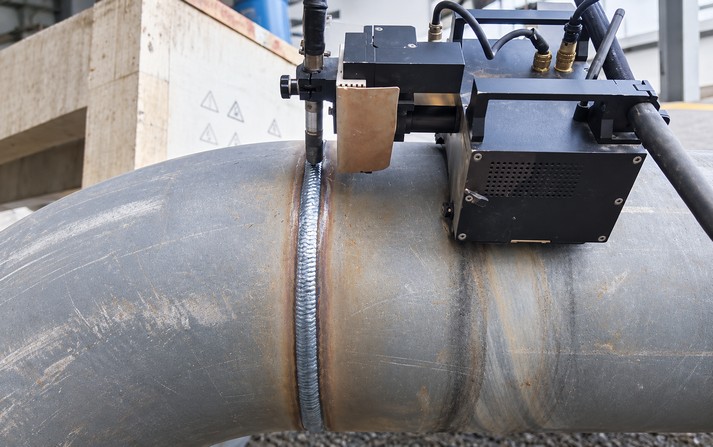
A rail-mounted orbital welding machine requires guide track installation, alignment, and removal. On a 36-inch girth weld, that can easily consume 20–30 minutes before the first arc starts. Trackless magnetic systems—where the carriage attaches directly to the pipe surface—cut that setup dramatically. For spread work where every joint counts, that time savings compounds across hundreds of welds.
The trade-off is curvature. Magnetic adhesion works best on consistent pipe OD. If the pipe has significant ovality or the weld is near a fitting or flange, rail systems with flexible track still have a place. Magnatech’s Flx-Track bridges both approaches: a flexible track with magnetic attachment that mounts on complex curved surfaces, used on the Syncrude project where access was the constraint, not pipe geometry.
From the pendant, the operator isn’t managing the arc anymore—they’re managing travel speed, oscillation width, and wire feed. The Magnatech control interface lets you adjust parameters on the fly without stopping the pass. That matters on preheated pipe where stopping mid-pass risks interpass temperature loss. The skill shifts from “holding a steady hand” to “reading the puddle and knowing when to dial in.” Welders who adapt make the transition quickly. Those who don’t struggle, because the machine doesn’t hide a bad joint fit-up.
An orbital welding system from established orbital welding machine manufacturers runs $50K to $500K per spread depending on configuration, process capability, and pipe range. That sticker price stops the conversation in some shops. It shouldn’t.
Automatic welding on suitable large-bore spreads typically cuts total cost per joint by 15–30% and raises productivity 200–400% compared to manual welding. The break-even point on mainline construction lands around 15–30 km of pipe. For a shop running year-round spool fabrication, that math is even more favorable—the equipment doesn’t sit idle between projects.
The bigger number nobody puts in the spreadsheet: rework. A 5–10% manual defect rate on RT-critical girth welds versus sub-1% mechanized is the difference between a profitable spread and one that bleeds money on repair labor, re-inspection, and schedule slippage.
Short runs. One-off spools with multiple fittings and branches. Pipe under 8 inches where manual TIG is faster than setup. A Magnatech orbital welding system is not a universal replacement for a skilled pipe welder. It’s a production tool for repetitive large diameter pipe welding where consistency and speed determine whether the shop makes money.
If you’re comparing orbital welding machine manufacturers for a large-diameter application, the spec sheet only tells part of the story. Ask these three questions on a demo:
How long does it take to mount and align on your actual pipe size? Not the demo pipe. Yours. With your access constraints.
What’s the repair rate on the manufacturer’s reference jobs? Ask for a specific project and contact. The Syncrude 0.086% number came from the area superintendent, not a sales deck.
How does the system handle fit-up variation? Large diameter pipe welding reality includes high-low, gap variation, and ovality. A system that only welds perfect joints is a system you’ll fight every day.
Magnatech’s position in the orbital welding market comes from decades of field data across nuclear, oil and gas, and heavy fabrication. The Pipeliner and D-Head platforms are proven, not experimental. But the system is only as good as the procedure development and operator training behind it. Budget for both.
The Pipeliner II 609 covers 6-inch to 60-inch with standard guide rings, extendable to larger diameters with custom rings. The D-Head 420 handles 1-inch to 14-inch for multipass GTAW. For large diameter pipe welding above 60 inches, contact Magnatech for custom mounting solutions.
FCAW is generally preferred for field large diameter pipe welding because the flux provides better tolerance to mill scale and wind disruption. GMAW offers faster travel speeds but requires better shielding gas protection. Most large-bore spreads use FCAW for fill and cap.
Equipment outlay runs $50K–$500K per spread, roughly 2–3x manual welding setup. But automatic welding cuts total cost per joint by 15–30% through labor reduction and lower repair rates, with break-even at approximately 15–30 km of mainline pipe.
Magnetic trackless systems handle minor ovality well. For significant fit-up variation, flexible track systems like Flx-Track provide more consistent torch positioning. The practical limit depends on gap and high-low tolerance—large diameter pipe welding always requires good joint preparation regardless of the welding method.
Oil and gas pipeline construction, power plant piping, pressure vessel fabrication, shipbuilding pipe systems, and heavy industrial process piping. The Khurais seawater injection project and Syncrude coker expansion are two large-scale examples of Magnatech systems in field girth welding applications.
Zhengzhou Kehui Technology Co., Ltd
Email: info@zzkehui.com





 Chinese
 English
 OA
OA Current location:
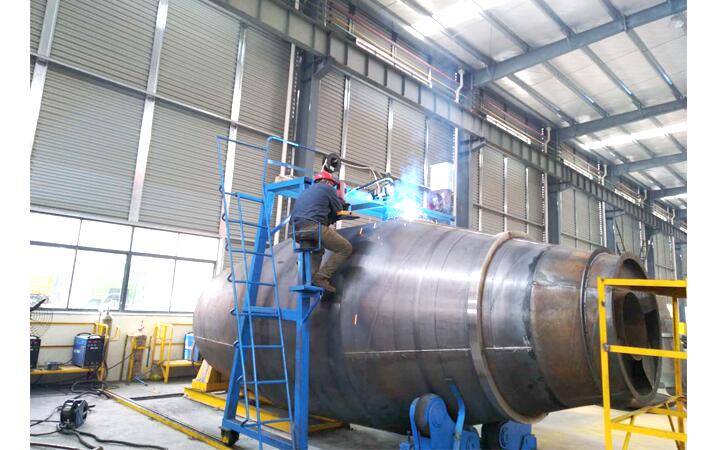 Concrete Mixer Drum Robotic Welding Solutions
 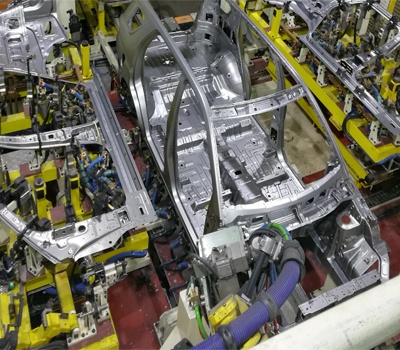 Automobile Body Production Line Welding Fixtures
 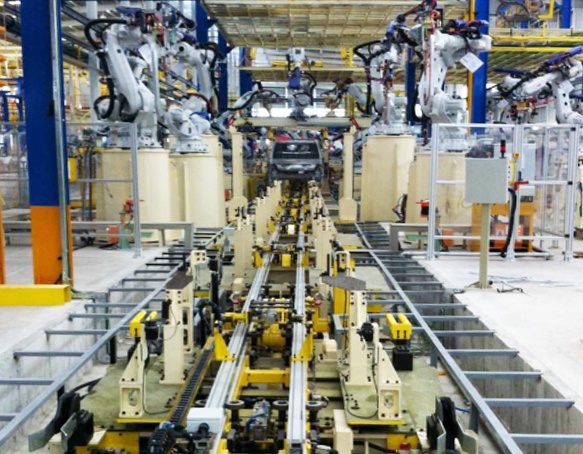 Automotive Body Welding Automated Manufacturing Solutions
 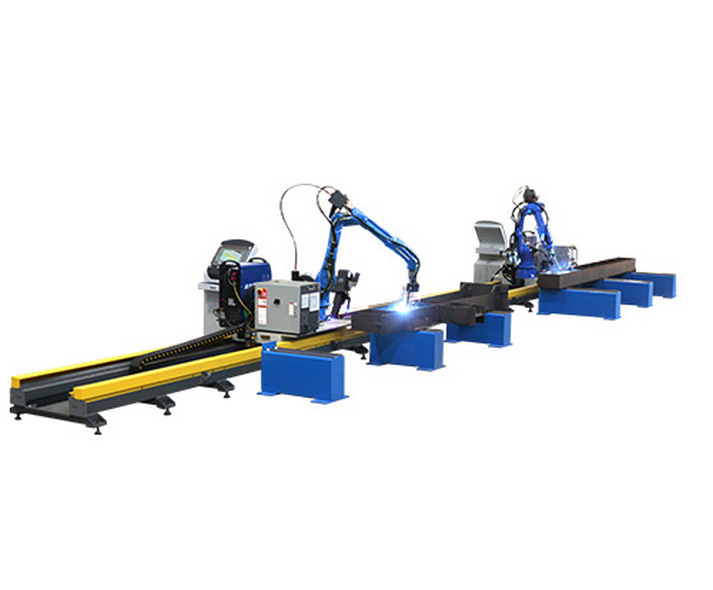 Free-Teaching Programming Welding Robot Cell For I Beam Welding
 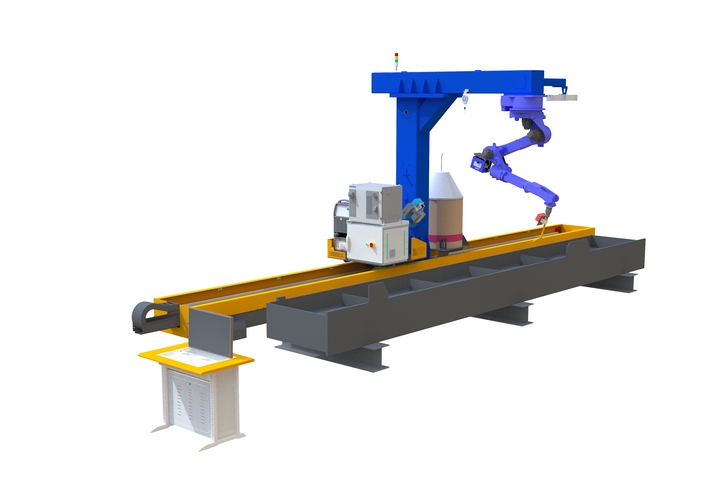 No Programming Required Robotic Welding Systems for H beam Welding Line